How to Design a Digital Wedding Invitation That Feels Personal, Not Templated
17 July 2026 · ElBach Digital Editorial Studio
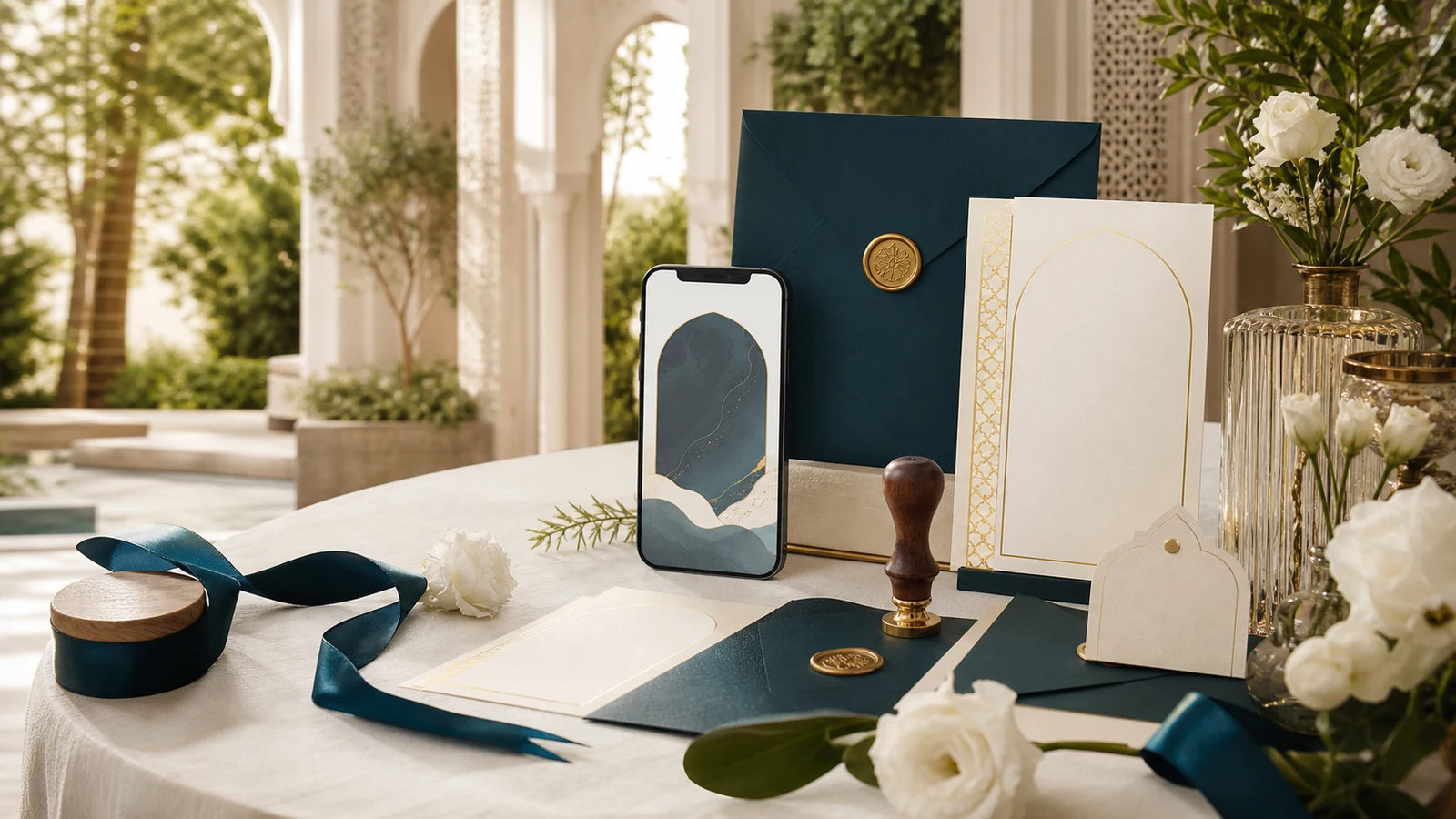
Move beyond generic designs. Craft digital invitations that reflect your story, respect your guests, and honor your cultural traditions with intention and elega
How to Design a Digital Wedding Invitation That Feels Personal, Not Templated
A digital wedding invitation arrives in your guests' inboxes as a moment of discovery. It should feel like an opening line in a conversation with people you trust, not a mass announcement. The difference between templated and personal lies not in complexity but in authenticity: the deliberate choices you make about color, language, timing, and content.
Whether you're planning a celebration rooted in Emirati tradition, a multicultural European gathering, or something entirely your own, a personalized digital invitation honors your guests and sets the emotional tone for what's to come.
Start with Your Story, Not a Design Library
The strongest invitations begin with a single, honest question: "What do we want our guests to feel when they open this?"
Before choosing fonts or colors, articulate what your celebration means. Are you blending two families? Honoring specific cultural rituals? Bringing together people from across continents? Creating an intimate gathering after a long period apart? Your answer shapes everything that follows.
Template libraries offer beautiful starting points, but they can obscure your voice. Instead, use them as reference only. Note elements you genuinely connect with, then ask yourself why. Is it the use of whitespace? A particular serif font? The way the color palette breathes? Once you understand your preferences, you can apply them with intention to a design that's uniquely yours.
Consider commissioning a modest custom design from a freelance designer if your budget allows. A few hours of professional guidance, informed by your story, often costs far less than you'd expect and produces something genuinely irreplaceable.
Respect Cultural Nuance in Design and Language
Personalization deepens when you honor the cultural contexts your celebration holds.
If your invitation draws from Arabic traditions, ensure Arabic text is typeset with the same care as English. Right to left languages require thoughtful layout. If you're including Quranic verses, dates according to the Islamic calendar, or references to pre wedding ceremonies like the henna night, position them with visual weight equal to the main event details. This isn't decoration; it's recognition.
For multicultural celebrations, resist the temptation to layer every tradition onto one design. Instead, decide which elements are central to your invitation's purpose. If the main celebration is secular but your ceremony includes traditional blessings, let the blessing have its own moment on a separate screen or section. Clarity serves respect.
European guests often expect a certain formality in language and structure. Middle Eastern guests may appreciate richer, more elaborate phrasing. Asian guests might value auspicious dates prominently displayed. Rather than compromising, choose one primary tone and let it reflect your primary celebration. You might offer multilingual welcome text that acknowledges your global guest list without overloading the core message.
Design Hierarchy: Guide Attention With Intention
Templated invitations often treat all information equally. Personal ones guide your eye deliberately.
Decide what matters most: the date? The couple's story? The location? The cultural significance? Place that first. Use typography, color, and whitespace to create a visual path. A single striking image or color block can anchor the invitation and create immediate personality.
For digital invitations, consider how the design appears on mobile first. Most guests will open your invitation on a phone. A beautiful desktop layout that collapses into confusion on mobile feels careless. Test your design across devices. If text becomes unreadable at any size, adjust.
Keep the invite itself scannable in under ten seconds. Detailed information like parking, accommodation recommendations, or dress code guidance belongs on secondary pages or dedicated sections, not the first view. Let the opening breathe.
Privacy, Accessibility, and Guest Convenience
Personalization includes thoughtful logistics.
Ask yourself: Does my guest list need to be visible to everyone? Multi generational or blended families sometimes prefer privacy. Ensure your RSVP platform allows you to hide guest lists if desired. Guests should feel safe, not surveilled.
Accessibility matters deeply. Choose fonts at readable sizes with sufficient contrast between text and background. Avoid thin, decorative fonts that look elegant at large sizes but disappear at small ones. Provide alt text for images. If you include video or audio (welcome messages, music), provide transcripts or captions.
Offer multiple RSVP methods. Some guests prefer clicking a digital button; others prefer email or phone. Not every elderly relative is comfortable with a new platform. Not every international guest has reliable internet at first attempt. Building in flexibility shows respect for your guests' actual circumstances, not imagined ones.
Tone of Voice and Personal Detail
Templated copy often reads corporate. Yours shouldn't.
Write in your voice. If you're casual and warm, let that show. If you're formal and traditional, embrace that. Avoid phrases that might appear in a hundred other invitations: "join us as we celebrate love," "two hearts becoming one," or other well worn sentiment.
Instead, include a specific detail that only you and your partner share. A line from a song that matters to you both. The name of the place where you met. A family recipe that will be served. A tradition unique to your families. One genuine detail creates more personality than a hundred elegant generalizations.
Consider a short video message from the couple. Nothing produced; nothing lengthy. Thirty seconds of you speaking directly to your guests creates intimacy no text can match. You don't have to be articulate. Authenticity is more memorable.
Color and Visual Consistency
Your invitation should feel like the first chapter of your celebration, not a separate document.
Choose a color palette of three to four colors maximum. These should appear consistently across your invitation, your RSVP platform, your wedding website if you have one, and ideally your thank you communications. Repetition builds recognition and personality.
Consider your cultural context. Certain colors carry meaning. Gold and deep jewel tones read as celebratory across many traditions. White and black carry different weight in different cultures. Saffron, green, and deep reds might reflect your heritage. Silver and champagne feel contemporary and restrained. Your choices communicate before words do.
Avoid trendy color combinations that will feel dated in photos. Opt instead for palettes that feel timeless to you personally.
Review Checklist for Personal Digital Invitations
Before sending, confirm:
- [ ] The invitation reflects your voice, not a template's default tone
- [ ] Cultural elements are treated with equal visual weight as secular details
- [ ] The design works clearly on mobile devices
- [ ] Text is readable and sufficiently contrasted
- [ ] Key information (date, time, location) is immediately visible
- [ ] RSVP options include digital and non digital methods
- [ ] Guest list visibility aligns with your comfort level
- [ ] At least one personal detail unique to your story appears
- [ ] Language choices respect all cultures represented in your guest list
- [ ] Color palette is limited and feels intentional
- [ ] You've tested the invitation across different devices and browsers
Frequently Asked Questions
Should I hire a designer or use a platform template?
Neither choice is wrong. Platforms like ElBach Digital offer customization options that can feel personal with thoughtful editing. Professional designers offer full creative control. The question is how much customization matters for your celebration and what fits your budget.
How long should a digital invitation be?
The opening screen should be concise: couple's names, date, time, location, and RSVP link. Secondary pages can hold accommodation details, parking, dress code, or cultural context. Length isn't the issue; clarity is.
Can I include multiple languages?
Absolutely. Offer a welcome in one or two primary languages, then let guests choose their preferred language for details. Multilingual invitations signal inclusion without overwhelming anyone.
What if my families have conflicting cultural expectations?
Honor both through structure, not by blending everything. If one family celebrates with a mehendi and the other with an engagement party, give each its own moment in your invitation timeline. Clarity prevents frustration.
How do I avoid looking unprofessional while staying personal?
Profit from one paid element: professional photography or a skilled designer's eye for two to three hours. Even that small investment elevates everything else. The rest can be your authentic work.
***
A personal digital invitation is a small act of generosity toward your guests. It says: I know you. I'm thinking of you. I've made choices that matter to me, and I wanted you to see them. That care is what transforms a templated moment into something genuinely memorable.
Ready to create something that feels entirely yours? Request a private consultation to explore how a thoughtfully designed RSVP platform can complement your invitation vision. Or discover more about crafting celebrations that honor your story in our editorial collection.
Planning a wedding?
Tell us about your celebration and receive a tailored proposal for a multilingual digital RSVP experience.
Tell us about your celebrationThe Journal, by email
One thoughtful celebration idea a day
Digital invitation guidance, guest experience, multilingual etiquette, and design ideas. Unsubscribe in one click.
ELBACH Digital FZ-LLC · Ras Al Khaimah, UAE · contact@elbachdigital.com