Wedding Website Typography That Works Beautifully in Arabic, English, French, and Urdu
06 August 2026 · ElBach Digital Editorial Studio
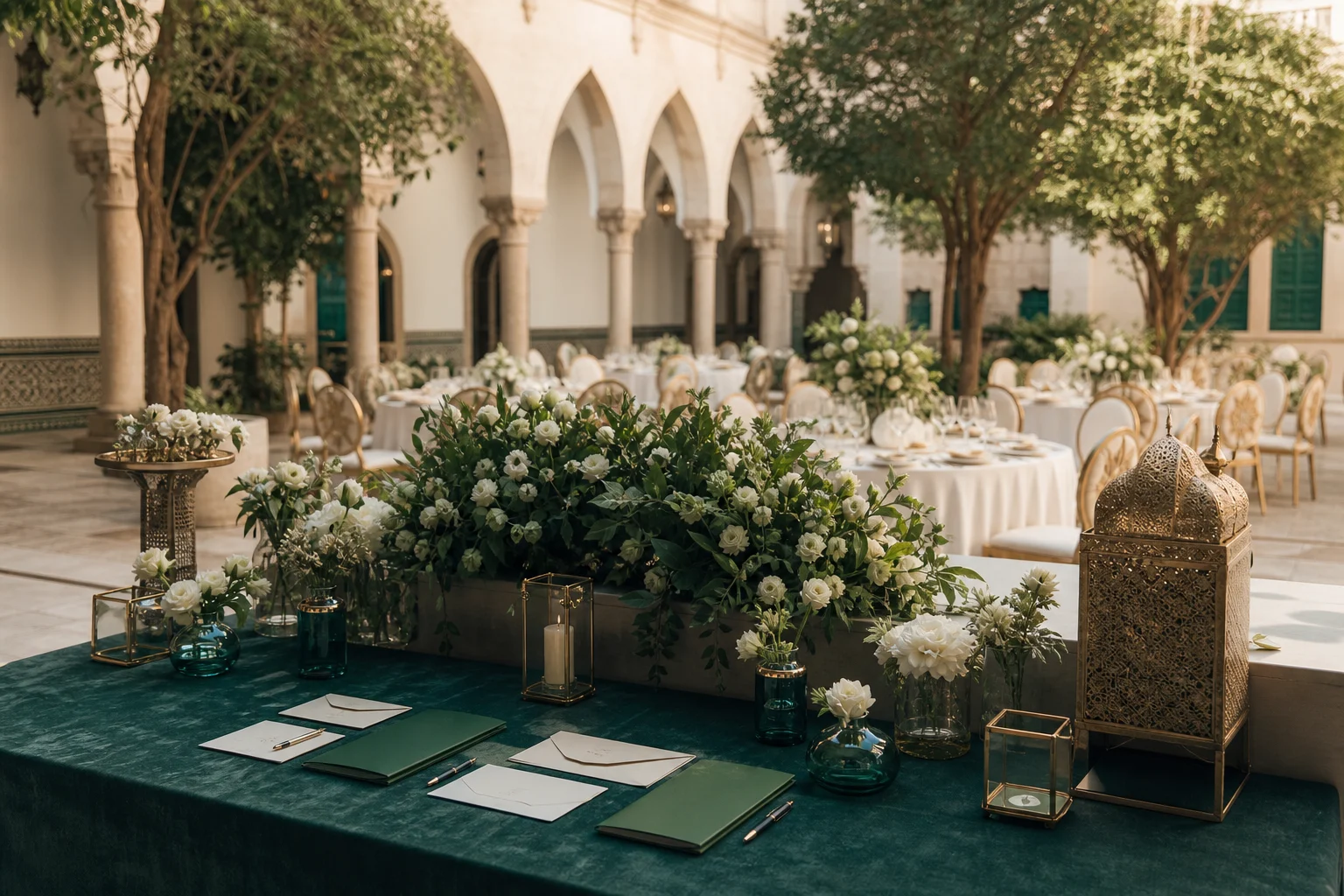
Designing a multilingual wedding website requires more than translation. Typography choices shape how your invitation feels to guests across languages. Learn...
When you're planning a wedding that reaches across continents, your website becomes a first glimpse into your celebration's soul. For couples and wedding professionals serving multilingual guests, typography isn't just about aesthetics.
Wedding website typography that works beautifully in Arabic, English, French, and Urdu demands thoughtful planning. Each script has different requirements. Arabic and Urdu flow right to left.
The couples we work with often discover this challenge only after selecting a typeface they love.
This guide helps you navigate these decisions with confidence, whether you're a couple designing your own website or a wedding professional serving international clients.
Understanding Script Systems and Design Differences
Arabic and Urdu are written in connected scripts where letters change shape depending on their position in a word. The same letter appears differently at the beginning, middle, end, or in isolation.
English and French use the Latin alphabet with fixed letterforms. French introduces accented vowels and a few other marks.
When a typeface doesn't properly support connected scripts, letters disconnect awkwardly, spacing becomes uneven, and readability suffers. Guests receive a digital invitation that feels incomplete or poorly considered. This matters to how they perceive your event.
Choosing Fonts That Support All Four Languages
Not all typefaces support all four scripts. Many beautiful fonts include only Latin characters. You need typefaces with proper Unicode support for Arabic, Urdu, and Latin including French accents.
Quality font families that work across all four languages include options like Noto Sans, Cairo, Droid Sans, and Segoe UI. These fonts have been designed to handle multiple scripts with consistent visual weight and character.
Test any typeface choice before finalising your design. Set actual text in each language and examine the results at different sizes. Look for even spacing, clear letterforms, and proportional balance.
Many couples working with professional designers find it worthwhile to consult with specialists who have experience in multilingual wedding design.
Pairing Typefaces Across Languages
Using two complementary typefaces, one for headings and one for body text, creates visual hierarchy. This becomes more complex when supporting multiple scripts.
A traditional approach pairs a serif typeface with a sans serif. When working multilingually, choose both fonts from the same family or from families designed to work together.
Avoid mixing fonts between languages. Setting English headings in one typeface and Arabic headings in another creates visual fragmentation. Your guests notice, even if they can't articulate why.
For wedding invitations specifically, consider how the typography shapes the emotional tone. A geometric sans serif conveys modern minimalism. A serif typeface suggests classical elegance. This character should feel consistent across all languages.
Creating a Multilingual Typography Checklist
When selecting and testing fonts for your wedding website, work through these practical checks:
Font support verification: Confirm the typeface includes complete character sets for Arabic, Urdu, and French. Check the font's documentation or test pages.
Rendering quality: Display the font on your actual website platform. Web rendering differs from design software. Arabic and Urdu text might look different in a browser than in your design application.
Size and spacing: Set body text, headings, and accent text at the sizes you plan to use. Check that Arabic and Urdu text maintains legibility. Ensure descenders don't overlap lines below.
Right to left functionality: Test that your website platform properly reverses the layout direction for Arabic and Urdu sections. This includes header navigation, image placement, and decorative elements.
Contrast and accessibility: Verify text meets accessibility contrast standards in all languages. Light text on light backgrounds becomes harder to read in Arabic and Urdu due to different letter structure.
Print compatibility: If your wedding website will be printed (for welcome boards, signage, or printed invitations), test how the fonts render on paper. Some web fonts optimise for screen display and may appear differently in print.
Typography for Venue Websites and Professional Pages
Wedding venues, florists, caterers, and other marriage professionals often build websites featuring multilingual content. Your typography choices set the tone for how guests perceive these services.
A luxury venue showcasing a ballroom might use elegant serif typefaces in headings and a clean sans serif for information about capacity, catering options, or accommodation.
Beauty salons and bridal boutiques working with multilingual clientele face similar challenges. A salon's website describing bridal makeup services needs typography that looks equally polished in Arabic, French, and English. This consistency builds confidence in the service quality.
Hotels providing accommodation information for wedding guests should prioritise clear sans serif typography that remains readable in all languages, even in lengthy passages about amenities, room types, or booking details.
Testing Across Devices and Browsers
Wedding websites must function beautifully on desktop computers, tablets, and mobile phones. Different devices render fonts differently. Arabic and Urdu text might reflow unexpectedly on smaller screens.
Test your multilingual typography on actual devices in each language. Check that heading sizes, line heights, and spacing work across the full range of screen sizes your guests might use.
Some font systems break Arabic and Urdu text unpredictably on mobile. Text that looks perfectly spaced on desktop might become crowded or poorly aligned on phones. This is why professional testing matters.
Practical Font Implementation Recommendations
Use web safe font combinations as fallback options. If a guest's browser doesn't load your chosen web font, reliable system fonts like Georgia, Helvetica, or Arial should still display your multilingual content clearly.
Limit yourself to two or three typefaces maximum. Each additional font increases loading time and makes visual consistency harder to maintain.
Set appropriate line height for readability. Arabic and Urdu text often requires slightly more line height than English to accommodate ascending and descending marks.
Choose font weights carefully. Lighter weights (300 or 400) work better for body text in all languages. Heavier weights (700 or bolder) can reduce legibility in Arabic and Urdu if not specifically designed to handle weight variations well.
Questions Couples and Professionals Often Ask
Q: Can I use different fonts for each language?
A: You could, but it's not advisable. Mixing fonts between languages creates visual inconsistency that confuses guests and diminishes your invitation's impact. A cohesive typography system across all languages feels more intentional and refined.
Q: Does font size need to differ between languages?
A: Often, yes. Arabic and Urdu text at the same point size as English might appear smaller or less clear due to script structure. You may need to increase size by 10 to 15% for comfortable reading.
Q: What if my designer says Arabic support isn't necessary?
A: Reconsider that guidance. If you're inviting Arabic speaking guests, Arabic support isn't optional. It's an essential part of creating an inclusive, respectful experience.
Q: Are expensive fonts better for multilingual weddings?
A: Price doesn't guarantee multilingual support. Many free fonts through Google Fonts or system fonts offer excellent multilingual capabilities. Quality matters more than cost.
Bringing It Together
Beautiful multilingual wedding websites start with typography choices that respect every script and language represented in your guest list.
Your typography communicates before your words do. Make those first impressions count across every language your guests speak.
Ready to build your multilingual celebration? Explore your private RSVP experience with ElBach Digital, where every detail of your wedding website design receives the attention it deserves. And for more guidance on crafting meaningful digital celebrations, visit our complete wedding resources.
Your international celebration deserves a website that feels as thoughtful and inclusive as your guest list.
Planning a wedding?
Tell us about your celebration and receive a tailored proposal for a multilingual digital RSVP experience.
Tell us about your celebrationThe Journal, by email
One thoughtful celebration idea a day
Digital invitation guidance, guest experience, multilingual etiquette, and design ideas. Unsubscribe in one click.
ELBACH Digital FZ-LLC · Ras Al Khaimah, UAE · contact@elbachdigital.com